Introduction
Launching a startup is exciting, but it also comes with pressure. You may have a strong idea, a useful product, or a service that solves a real problem, but none of that matters much if people do not understand who you are or why they should trust you. In the early stages, your brand becomes one of your strongest tools. It helps people recognize your business, remember it, and feel confident enough to take the next step.
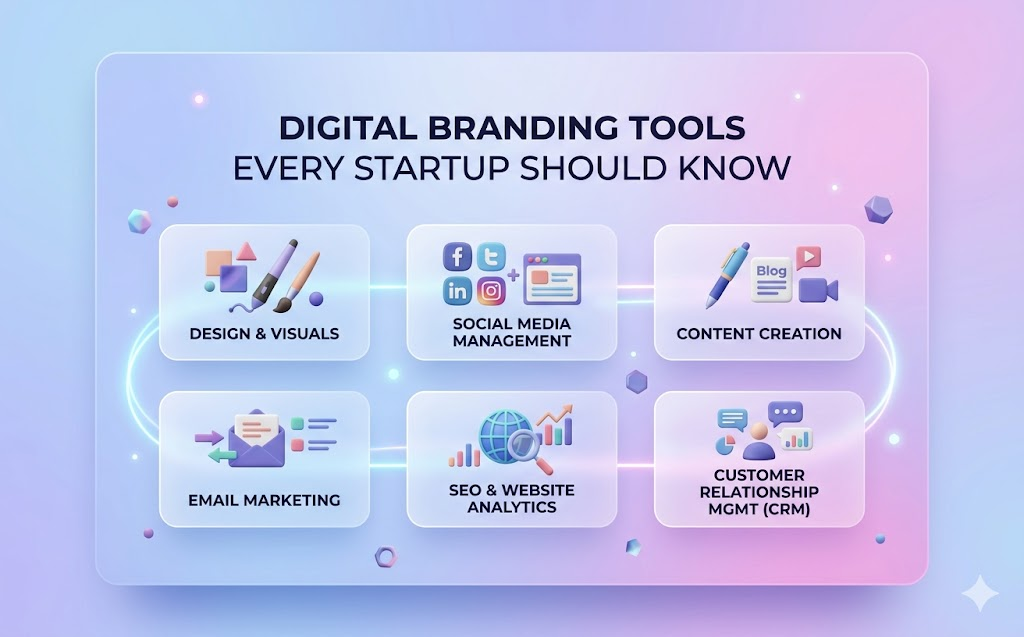
For many startups, branding can feel expensive and complicated. Hiring a full creative team is not always realistic, especially when the budget is tight and the business is still testing the market. Thankfully, digital branding tools have made it much easier for founders to create a professional identity without starting from zero. From logo makers and website builders to social media templates and analytics platforms, these tools help startups look polished, stay consistent, and grow faster.
One of the first branding elements every startup needs is a logo. A logo gives your business a visual identity and helps people connect a symbol or design with your company name. Instead of spending weeks trying to design one from scratch, founders can use an AI logo tool to explore creative ideas, test different styles, and quickly create a design direction that matches their business personality. This is especially helpful for early-stage startups that need to move quickly but still want to look professional.
Why Digital Branding Matters for Startups
Branding is more than choosing a nice logo or a few attractive colors. It is the overall feeling people get when they interact with your business. Your website, social media posts, emails, product images, tone of voice, and even your pitch deck all contribute to that impression. If these elements feel disconnected, your brand may look unclear or untrustworthy.
Startups often have only a few seconds to make a strong first impression. A potential customer may land on your website, scroll through your Instagram page, or open your email and quickly decide whether your business feels credible. A consistent digital brand helps remove doubt. It shows that you are serious, organized, and ready to serve your audience.
Digital branding tools make this process easier because they help founders create professional materials without needing advanced design skills. They also save time. Instead of creating every asset from scratch, startups can use templates, automation, and AI-powered features to build a strong visual presence more efficiently.
Logo Design Tools
A logo is usually the first visual asset a startup creates. It appears on the website, social media profiles, invoices, presentations, packaging, business cards, and marketing materials. Because of this, it should feel clear, memorable, and connected to the brand’s personality.
Logo design tools are useful because they allow founders to experiment. A startup can test modern, playful, minimal, bold, or elegant styles before deciding what feels right. These tools are not just about creating a final design; they also help founders understand what kind of visual identity fits their business.
For example, a wellness startup may prefer soft shapes, calm colors, and gentle typography. A cybersecurity startup may choose sharp lines, darker colors, and a more serious look. A children’s product brand may use bright colors and friendly shapes. Logo tools help bring these ideas to life quickly.
Color Palette Generators
Colors play a major role in how people experience a brand. They can make a company feel calm, energetic, luxurious, friendly, modern, or trustworthy. Choosing random colors can make a brand look messy, while a well-balanced palette creates harmony across all platforms.
Color palette generators help startups choose combinations that work well together. They can suggest primary colors, secondary colors, background shades, and accent colors. This makes it easier to design websites, social media graphics, ads, presentations, and product visuals that feel connected.
A strong color palette also saves time. Once the startup has selected its colors, the team no longer has to guess which shades to use for every new design. This creates consistency and makes the brand easier to recognize.
Font and Typography Tools
Typography is another branding element that many startups overlook. Fonts communicate personality before people even read the words. A bold font can feel confident. A handwritten font can feel personal. A clean sans-serif font can feel modern and simple. A classic serif font can feel elegant and established.
Font pairing tools help startups choose fonts that look good together. Usually, a brand needs one font for headings and another for body text. These fonts should be easy to read and suitable for the company’s tone. A serious B2B software company, for example, would probably avoid overly playful fonts, while a creative children’s brand might use something more fun and expressive.
Good typography makes websites, presentations, and marketing materials look more professional. It also improves readability, which is important when explaining a product or service clearly.
Website Builders
A startup’s website is often the center of its digital brand. It is where people go to learn about the company, understand the offer, and decide whether to trust the business. Even a simple website can be powerful if it is clear, well-designed, and easy to navigate.
Website builders help startups create professional pages without needing a full development team. Many platforms offer ready-made templates, drag-and-drop editing, mobile-friendly layouts, and built-in SEO features. This allows founders to launch faster and update their website as the business grows.
The best startup websites are not overloaded with unnecessary details. They explain what the company does, who it helps, what problem it solves, and what visitors should do next. A strong website should also match the startup’s logo, colors, fonts, and tone of voice.
Social Media Design Tools
Social media is one of the easiest ways for startups to build visibility. However, posting randomly without a clear style can make the brand look inconsistent. Social media design tools help startups create branded posts, stories, banners, ads, and announcements using reusable templates.
Templates are especially helpful for small teams. Instead of designing every post from scratch, the team can create a few layouts and reuse them for different types of content. For example, one template can be used for tips, another for customer reviews, another for product updates, and another for announcements.
When people repeatedly see the same visual style, they begin to recognize the brand. This recognition builds familiarity, and familiarity often leads to trust.
Email Branding Tools
Email is still one of the most effective ways to communicate with customers. A welcome email, newsletter, product update, or promotional message can strengthen a startup’s relationship with its audience. But plain or poorly designed emails can make the brand feel less professional.
Email branding tools allow startups to create clean and consistent email templates. These templates can include the logo, brand colors, buttons, headers, and footer information. A well-designed email feels more trustworthy and makes the message easier to read.
Good email branding also supports customer experience. When your emails look and sound like the rest of your brand, people feel like they are communicating with a real, organized business.
Brand Guideline Tools
As a startup grows, more people may begin creating content for the business. This can include designers, marketers, freelancers, salespeople, and customer support team members. Without clear brand guidelines, everyone may use different colors, fonts, wording, and visuals.
Brand guideline tools help organize all brand rules in one place. A simple guideline document can include logo usage, color codes, typography, image style, tone of voice, and examples of correct and incorrect usage.
This does not need to be complicated in the beginning. Even a basic brand guide can help a startup stay consistent. It also makes collaboration easier because everyone knows how the brand should look and sound.
Presentation and Pitch Deck Tools
Startups often need to present their ideas to investors, partners, clients, or early users. A pitch deck is not only a business document; it is also a branding opportunity. A clean, well-designed presentation can make a startup look more prepared and credible.
Presentation tools help founders create branded slides without spending too much time on design. The deck should use the startup’s colors, fonts, and visual style, but it should also stay simple. Too much text or too many design elements can distract from the message.
A strong pitch deck tells a story. It explains the problem, presents the solution, shows the market opportunity, and communicates why the startup matters. Good branding makes that story feel more confident and memorable.
Video Creation Tools
Video has become a powerful branding format because it helps explain ideas quickly. Startups can use videos for product demos, tutorials, social media content, founder introductions, customer stories, and ads.
Video creation tools make this easier by offering templates, stock assets, subtitles, voiceovers, and simple editing features. A startup does not always need a big production budget to create useful video content. A short, clear, branded video can often be enough to explain value and build trust.
Videos also make a brand feel more human. When customers can see how a product works or hear the story behind a company, they are more likely to connect with it.
Analytics Tools
Branding should be creative, but it should also be measured. Analytics tools help startups understand what is working and what needs improvement. They can show which website pages get the most visits, which social posts receive the most engagement, and which emails lead to clicks or sign-ups.
This information helps startups make better branding decisions. For example, if educational content performs better than promotional content, the brand may need to focus more on being helpful. If a landing page gets traffic but few conversions, the messaging or design may need to be improved.
Analytics tools help startups avoid guessing. Instead, they can use real data to refine their brand over time.
Project Management Tools
Branding involves many moving parts. A startup may need to manage website updates, social media posts, design tasks, email campaigns, content calendars, and product launches. Without organization, things can quickly become messy.
Project management tools help teams stay aligned. They allow everyone to track tasks, deadlines, responsibilities, and brand assets in one place. This is especially useful for remote teams or startups working with freelancers.
When branding tasks are organized, the team can move faster and avoid confusion. It also helps maintain consistency because everyone works from the same plan.
How to Choose the Right Branding Tools
Startups do not need to use every tool available. The best approach is to choose tools based on current needs. In the beginning, it is usually enough to focus on the essentials: logo, colors, fonts, website, social media templates, and email design.
Before choosing any tool, founders should ask a few important questions. What does the brand need right now? Will this tool save time? Will it help the brand look more consistent? Is it easy for the team to use? Does it fit the budget?
The right tools should make branding easier, not more complicated. A startup should avoid building a huge tool stack that becomes difficult to manage.
Conclusion
Digital branding tools have made it possible for startups to build a strong identity faster and more affordably than ever before. From logo design and color palettes to websites, emails, videos, and analytics, these tools help new businesses create a professional presence even with limited resources.
A strong brand does not need to be perfect from day one. It simply needs to be clear, consistent, and trustworthy. As the startup grows, the brand can evolve with it. The most important thing is to build with intention. When every visual, message, and customer touchpoint feels connected, people are more likely to remember the startup and trust what it offers.
For startups trying to stand out in a crowded digital world, branding is not just decoration. It is part of the business strategy. With the right digital tools, even a small team can create a brand that feels polished, human, and ready to grow.