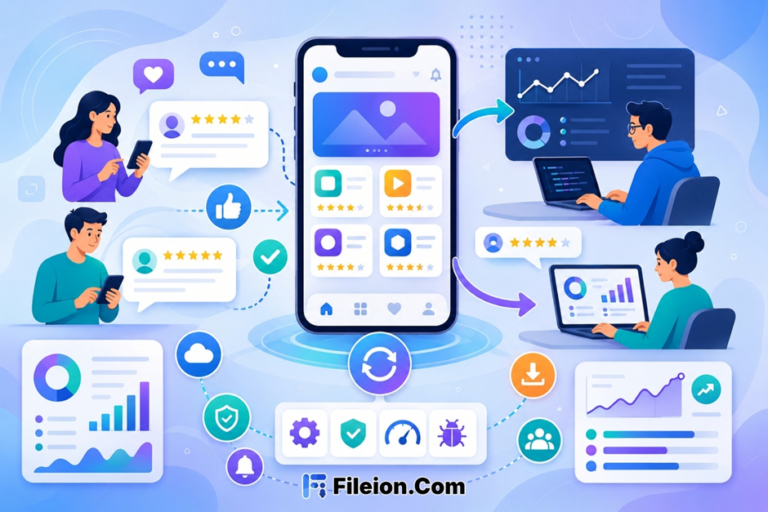
Businesses searching for which customer service software uses ai are navigating one of the fastest-evolving markets in enterprise technology, where new entrants, acquisitions, and capability leaps are happening every few months. Natural language processing, generative AI, machine learning, and agentic automation have completely reshaped what support teams can accomplish — and the platforms powering that shift deserve a close look.
This guide covers the top platforms, their core AI capabilities, how they compare, and exactly what to evaluate before making a decision.
What Is AI Customer Service Software?
AI customer service software uses machine learning to continuously improve and adapt based on data. Most platforms are trained on your knowledge base content and historical support responses to increase the likelihood that the answers they provide are accurate over time.
These systems also use natural language processing (NLP) to understand requests the way a human would — extracting meaning from conversational queries rather than relying on rigid keyword triggers or predefined scripts. Instead of following a fixed decision tree, a modern AI support agent can hold a conversation, ask follow-up questions, pull real-time data from your CRM or order management system, and close tickets end-to-end without escalating to a human agent.
If you’ve been wondering which customer service software uses ai at this level of depth, the answer is: quite a few platforms, but with very different levels of sophistication.
Key AI Capabilities to Look For
Before comparing platforms, it helps to understand the core AI features that separate basic automation from true agentic support. The top-ranking software in this space typically offers:
Intelligent Self-Service Modern AI agents use generative AI to understand customer intent, hold natural conversations, and take action — processing returns, updating accounts, or booking appointments — without requiring human involvement at every step.
Agent Copilot Features This is the AI working behind the scenes to assist human agents. Key functions include real-time conversation summaries, AI-suggested replies that stay on-brand, automatic knowledge base surfacing, and similar-ticket lookup. This layer reduces handle time and helps agents close more tickets per shift.
Automated Ticket Routing and Triage Rather than sorting by simple keywords, intelligent triage uses intent detection and sentiment analysis to route conversations based on urgency, topic, and customer emotion. This ensures the right conversation reaches the right team — or the right AI workflow — immediately. will software engineers be replaced by ai
Sentiment Analysis and Predictive Analytics Real-time sentiment detection identifies frustrated or high-risk customers and can trigger automatic escalations. Predictive analytics goes further, forecasting support volume, identifying churn risk, and enabling proactive outreach before a problem becomes a complaint.
Omnichannel Coverage The strongest platforms consolidate email, chat, voice, WhatsApp, SMS, and social media into a single unified inbox. AI agents maintain context across channel switches, so customers don’t have to repeat themselves.
Knowledge Base Intelligence Some platforms can automatically generate help articles from past conversations, identify content gaps, and keep documentation up to date as products change — without requiring manual effort from your team.
Top AI-Powered Customer Service Platforms in 2026
Zendesk
Zendesk has positioned AI as its central strategic priority, and the 2026 platform reflects that across every layer of the customer service workflow. Its AI agents handle autonomous resolution of common queries through self-service and messaging channels. The Zendesk Copilot provides real-time suggested responses, macro recommendations, and ticket summarization for human agents. AI-powered triage and routing directs contacts to the right team or automated workflow based on intent and sentiment rather than simple keyword matching. The acquisition of Forethought in early 2026 added further autonomous resolution depth, making the combined platform one of the most complete full-stack options in the market. It serves everyone from scaling technology businesses to large enterprises.
Intercom (Fin)
Intercom is one of the clearest answers to which customer service software uses ai at the agent level. Its AI agent, Fin, runs on a proprietary model trained specifically for customer service and resolves complex support conversations end-to-end across chat, email, voice, SMS, and social. Through Data Connectors, Fin can pull real-time CRM, billing, and order data to execute multi-step workflows like refund processing, account updates, and troubleshooting autonomously — handing off to human agents with full conversation context when needed. Intercom’s pricing model charges per resolved conversation, aligning costs directly with outcomes rather than seat licenses.
Freshdesk (Freddy AI)
Freshdesk by Freshworks incorporates AI through its Freddy AI suite, making it a strong option for small to medium-sized businesses. Freddy powers AI chatbots capable of handling routine inquiries, multichannel support across email, chat, phone, and social media, as well as automated ticket routing and agent assist features. Notably, Freshdesk’s basic features are free, which is rare among AI customer service companies — and Freddy AI is available at no cost for up to 10 agents in a limited scope, making it accessible to businesses with tighter budgets that are still evaluating which customer service software uses ai for their team.
Salesforce Einstein (Agentforce)
Salesforce Einstein is an integrated suite of AI technologies built into the Salesforce Service Cloud platform. It enhances CRM by automating tasks and delivering actionable insights through Einstein Bots, AI-driven chatbots that handle customer queries. The Einstein Language APIs bring NLP and image recognition capabilities to analyze customer data. The platform targets sales and marketing teams, customer service teams, and business analysts. Agentforce, Salesforce’s newer AI agent platform, extends these capabilities into autonomous resolution across channels. If your business is already running Salesforce as its CRM backbone, this is likely the most seamless path to understanding which customer service software uses ai within your existing infrastructure.
Kustomer
Kustomer is an all-in-one, AI-powered service platform that combines a native CRM, ticketing, and AI into a single solution. Its core philosophy uses rich, unified customer data from its CRM to fuel its AI — enabling more accurate and personalized automations. This “data plus AI plus humans” approach allows businesses to resolve issues with AI agents, assist human reps with a copilot, and optimize all workflows on one platform. Kustomer’s AI agents handle email, chat, social, and voice autonomously by connecting to backend systems to check order status or process returns. The agent copilot handles conversation summaries, on-brand reply suggestions, and intelligent triage based on customer intent and sentiment.
Zoho Desk (Zia)
Zoho Desk is a widely used help desk platform that integrates Zia, an AI assistant designed to elevate the customer service experience. Zia equips teams with analytical insights, simplifies repetitive duties, enriches customer connections, and streamlines operations. It reduces agent workloads, fields standard inquiries through its bot, and even assists in lead qualification and scheduling. For teams exploring which customer service software uses ai without a steep implementation overhead, Zoho Desk’s tight integration with the broader Zoho ecosystem and third-party tools like Slack, Mailchimp, and Zapier makes it an attractive, low-friction option.
Ada
Ada is an AI-powered customer service automation platform built specifically to handle high volumes of customer interactions at scale. What sets Ada apart is its strong focus on voice support — making it ideal for businesses that receive queries by phone as much as by text. Ada also offers multiple chatbot personas, making it adjustable to any brand voice. Its AI agent learns and continuously improves, with some deployments reporting automated resolution rates that replace declarative chatbots with generative AI agents that deliver meaningfully higher accuracy over time. Global brands looking for enterprise-grade omnichannel support will find Ada a compelling answer when evaluating which customer service software uses ai for voice-heavy workflows.
Help Scout
Help Scout is best suited for teams wanting to gradually introduce AI to assist human agents rather than replace them. Its AI features answer frequently asked questions automatically, draft and edit replies for human agents, summarize long conversation threads, and translate replies into other languages. Its Beacon tool serves as an embeddable help hub, giving customers self-service access to the help center, past conversations, and AI-powered answers. Help Scout’s measured, human-first approach to AI makes it particularly useful for support teams that are not yet ready for full agentic automation.
Tidio (Lyro)
Tidio is a customer service platform built for small and mid-sized businesses that need live chat, chatbot automation, and AI-powered support in one package. Lyro, its AI agent, handles repetitive customer questions using natural language — trained on help center content and FAQ data — and hands off to a human agent with full context when it cannot resolve an issue. Lyro runs on Anthropic’s Claude model. Tidio supports chat, email, Instagram, Messenger, and WhatsApp from a single inbox, with a visual drag-and-drop Flows builder for custom automations without code.
HappyFox
HappyFox integrates AI across ticket management, SLA automation, reporting dashboards, and knowledge base optimization rather than focusing primarily on chatbots. Its AI Resolve feature generates direct, personalized responses inside the support portal using generative AI, reducing ticket volume. The AI Agent Copilot assists agents with response drafting, ticket summaries, translation, similar-ticket lookup, and canned response recommendations. PC Mag has named it Best Help Desk Software for seven consecutive years. Mid-sized and enterprise teams needing deep AI automation combined with structured workflows and SLA management will find it a strong contender when assessing which customer service software uses ai across operational complexity.
Comparison Table: AI Customer Service Platforms at a Glance
| Platform | Best For | Core AI Features | Pricing Model |
|---|---|---|---|
| Zendesk | Mid-market to enterprise | AI agents, Copilot, triage, analytics | Per agent/tier |
| Intercom (Fin) | SMB to mid-market | End-to-end AI resolution, copilot | Per resolved conversation |
| Freshdesk (Freddy) | SMB / budget-conscious | Chatbots, routing, agent assist | Free tier available |
| Salesforce Einstein | Enterprise CRM users | Bots, NLP, predictive analytics | Custom |
| Kustomer | Enterprise CRM-centric | AI agents, copilot, omnichannel | Per agent |
| Zoho Desk (Zia) | SMB / Zoho ecosystem users | AI assistant, analytics, routing | Tiered |
| Ada | High-volume / voice-heavy | Voice AI, omnichannel bots | Custom |
| Help Scout | Human-first teams | AI drafting, summarization, FAQ | Per agent |
| Tidio (Lyro) | Small businesses | Chatbot, NLP, visual automations | Free + paid tiers |
| HappyFox | Enterprise operations | SLA AI, generative resolve, copilot | Per agent |
How AI Works Inside These Platforms
Understanding which customer service software uses ai is one thing — understanding how the AI actually works is another. Here is a brief breakdown of the underlying technologies:
Machine Learning trains on your historical conversations, knowledge base articles, and resolved tickets to improve accuracy over time. The model learns what good answers look like in your context, which means resolution quality improves the longer the system is in use.
Natural Language Processing (NLP) is the technology that enables these platforms to understand what customers are asking even when phrasing varies significantly. Instead of matching exact keywords, NLP extracts intent from naturally written queries.
Generative AI powers the ability to draft replies, create knowledge base articles, summarize conversations, and produce contextual answers rather than simply retrieving pre-written responses. Most platforms now use large language models (LLMs) — either proprietary or built on models like GPT-4 or Claude — as the generative layer.
Agentic AI refers to AI that can not only respond but also take action: processing a refund, updating a subscription, canceling an order, or booking an appointment directly within connected systems. Gartner predicts agentic AI will autonomously resolve 80% of common customer service issues without human intervention by 2029, which explains why nearly every top platform is racing to build this capability.
What to Consider When Choosing a Platform
Every business asking which customer service software uses ai will have different requirements. Here is what to evaluate:
Resolution rate vs. draft-and-approve: Some businesses want full autonomy, while others prefer AI to draft responses for human review. Establish your comfort level with automation before selecting a platform.
Integration depth: The AI can only act on data it can access. Platforms that connect natively to your ecommerce stack, CRM, ERP, and billing system will deliver far more useful automation than those that operate in isolation.
Omnichannel coverage: Confirm the platform supports every channel your customers currently use — and the ones you plan to add. Rebuilding AI flows for each channel separately is expensive and time-consuming.
Pricing transparency: Common models include per-agent seat licenses, per-resolved-conversation pricing, and custom enterprise contracts. Per-resolution pricing aligns costs with outcomes but can become unpredictable at scale.
Security and compliance: Enterprise-ready platforms offer data encryption, role-based access control, audit logs, and compliance with SOC 2 and GDPR. Regulated industries should confirm certifications before shortlisting.
Scalability: A platform that works well at 1,000 tickets per month needs to perform equally well at 100,000. Test performance under load and ask vendors specifically about volume spikes.
The Business Case for AI in Customer Service
McKinsey research suggests generative AI in customer service could boost productivity by 30% to 45% of current functional costs. HubSpot data shows 92% of CRM leaders say AI makes it easier to respond to service requests, and 74% report that tool switching makes ticket resolution take longer — highlighting why unified platforms outperform point solutions.
Teams that know which customer service software uses ai effectively are moving from a cost-center mindset toward a model where customer service directly drives retention, upsell, and customer lifetime value. When AI handles the repetitive load — FAQ responses, order status, returns processing, ticket tagging — human agents are freed to focus on complex, high-value interactions that build lasting customer loyalty.
Frequently Asked Questions
What is the difference between a chatbot and an AI customer service agent?
Traditional chatbots follow predetermined scripts and fail when customers deviate from expected patterns. AI customer service agents use machine learning and NLP to understand variations in phrasing, detect sentiment, improve responses over time, and take action within connected backend systems. They can also escalate complex issues to human agents while maintaining full conversation context.
Can AI customer service software integrate with my existing CRM?
Yes. Most leading platforms offer integrations with Salesforce, HubSpot, Zendesk, and other major CRM systems. The depth of integration varies significantly — some offer surface-level data sync, while others enable the AI to execute actions directly within the CRM, such as updating records or triggering workflows.
How long does it take to implement AI customer service software?
Implementation timelines range from a few days for plug-and-play tools like Tidio to several weeks or months for enterprise platforms like Salesforce Einstein or Kore.ai that require custom NLP training, workflow configuration, and system integration. Starting with a “draft-and-approve” model rather than full autonomy reduces risk during rollout.
Is AI customer service software suitable for small businesses?
Absolutely. Tools like Tidio, Freshdesk, and Help Scout offer free or low-cost tiers designed specifically for small and medium-sized businesses. These platforms provide genuine AI capabilities — chatbots, NLP, auto-routing — without the enterprise price tag or implementation complexity.
How accurate is AI when resolving customer inquiries?
Accuracy depends heavily on the quality and volume of training data — primarily your knowledge base content, past resolved tickets, and product documentation. Well-implemented systems report automated resolution rates above 70% to 80% for routine inquiries. For complex, multi-step issues, a hybrid model where AI drafts and humans approve tends to deliver better outcomes than full autonomy.
Does AI customer service software support multiple languages?
Most major platforms support multilingual interactions through NLP-based translation and language detection. Platforms like Ada and Crescendo.ai advertise support across 50 or more languages, making them suitable for global support operations where consistent quality across languages is critical.
What happens when AI cannot resolve a customer issue?
Modern AI customer service platforms are designed to detect when they cannot resolve an issue and hand off to a human agent — along with full conversation context, a summary, and suggested next steps. This prevents customers from having to repeat themselves and reduces handle time for the human agent taking over.